

What you will learn from this article
If you are planning to explore the rich history of Corfu, keep reading.
To further delve into the island’s past, exploring Corfu’s castles and museums can provide a deeper understanding of its historical significance.
In this article, you will come across:
The myths and legends that gave Corfu its name
How Venetian rule shaped the island’s unique architecture and culture
The dramatic details of the Corfu Incident of 1923
How the island survived and rebuilt after World War II
Why Corfu’s history makes it so different from other Greek islands
Are you ready to travel back in time?
In this article, you will discover the rich story behind the green hills and blue seas. From ancient naval battles to modern diplomatic crises, we will take you through the centuries to understand why Corfu is known as the “living museum” of Greece. We can’t wait for you to read the story of this fascinating island!
Key Takeaways
The article provides a comprehensive chronological journey, explaining how Corfu’s strategic position between East and West attracted rulers from the Romans to the British.
It highlights the defining characteristic of Corfu’s history—its exemption from Ottoman rule and its deep Venetian influence—which created its distinct Western European identity.
Corfu’s Historical Journey
Corfu is one of the most beautiful islands in Greece, but it is also one of the most historic. At first glance, visitors notice green hills, clear blue seas, and elegant old buildings. Behind this beauty, however, there is a long and rich story that makes Corfu very different from other Greek islands.
Because of its position in the Ionian Sea, Corfu has always been important. The island stands between Greece, Italy, and the Balkans. For this reason, many powerful nations wanted to control it. Over the centuries, Corfu was ruled by ancient Greeks, Romans, Byzantines, Venetians, French, and British. Each of them left something behind.
One of the most special facts about Corfu is that it was never occupied by the Ottomans. While most of Greece lived under Ottoman rule for hundreds of years, Corfu followed a different path. This history shaped the island’s culture, architecture, and way of life. Today, Corfu is a living museum where the past can still be seen everywhere.
Myth and Ancient Corfu
The history of Corfu Greece begins with myth. In ancient times, the island was called Korkyra. According to Greek mythology, the sea god Poseidon fell in love with a beautiful nymph named Korkyra. He took her to the island and named it after her. This myth shows how closely Corfu was connected to the sea from the very beginning.
The first settlers came from Corinth around the 8th century BC. Because Corfu was located on important sea routes, it quickly became strong in trade and naval power. Ships traveling between Greece and Italy often stopped there. As a result, Corfu grew rich and powerful.
During the Peloponnesian War, Corfu played an important role. It supported Athens and had one of the largest fleets in ancient Greece. However, its power also brought conflict. The island experienced internal struggles and battles with other Greek cities.
Even though little remains from this early period, ancient Corfu laid the foundation for the island’s future. Its strong connection to the sea and its strategic position would continue to shape its history for centuries.
Roman and Byzantine times
In the 2nd century BC, Corfu became part of the Roman Empire. Under Roman rule, life on the island became more stable. Trade increased, roads were improved, and Corfu became safer from pirates. The island was not a major Roman center, but it benefited from peace and economic growth. During this time, Christianity began to spread across Corfu. Early Christian communities formed, and new churches were built. Religion slowly became an important part of everyday life.
When the Roman Empire split into East and West, Corfu became part of the Eastern Roman Empire, also known as the Byzantine Empire. The island’s role changed again. Now, Corfu was seen as a defensive point protecting the western borders of Byzantium.
Because of this, the Byzantines strengthened the island’s defenses. Early fortifications were built, and people moved to safer areas. These first walls would later be expanded by future rulers. Corfu was becoming a fortress island, ready to protect itself from enemies coming from the west or the east.
Venetian Rule, the most important chapter
In 1386, Corfu came under the control of Venice. This was a turning point in the island’s history. At the time, the Ottoman Empire was expanding rapidly. Corfu chose Venetian protection in order to survive.
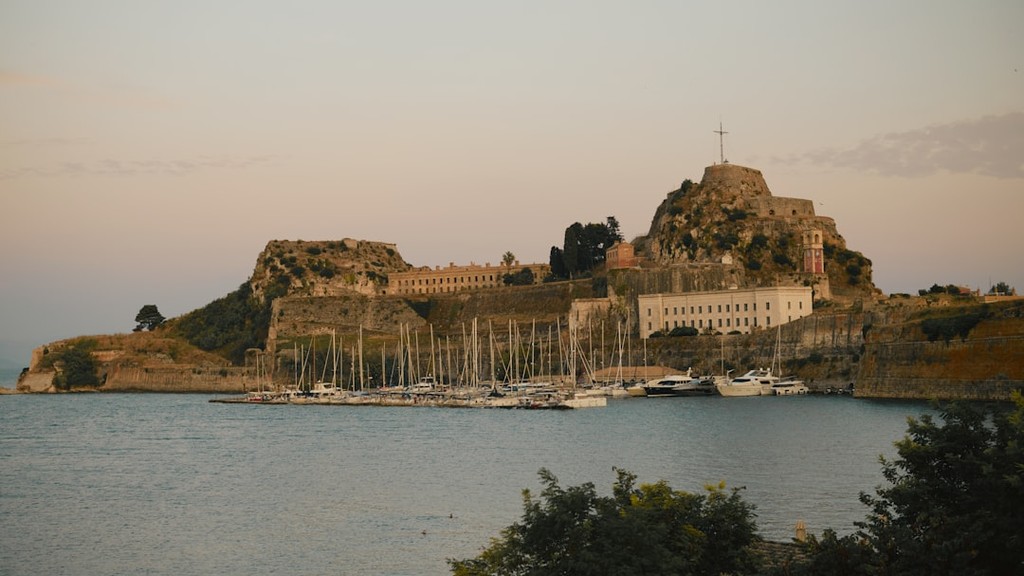
Venetian rule lasted for more than 400 years, and it had a deep influence on the island. Venice invested heavily in Corfu’s defenses. Massive fortresses were built, including the Old Fortress and the New Fortress. These strong walls helped Corfu survive many Ottoman attacks. While other parts of Greece fell to the Ottomans, Corfu remained free.
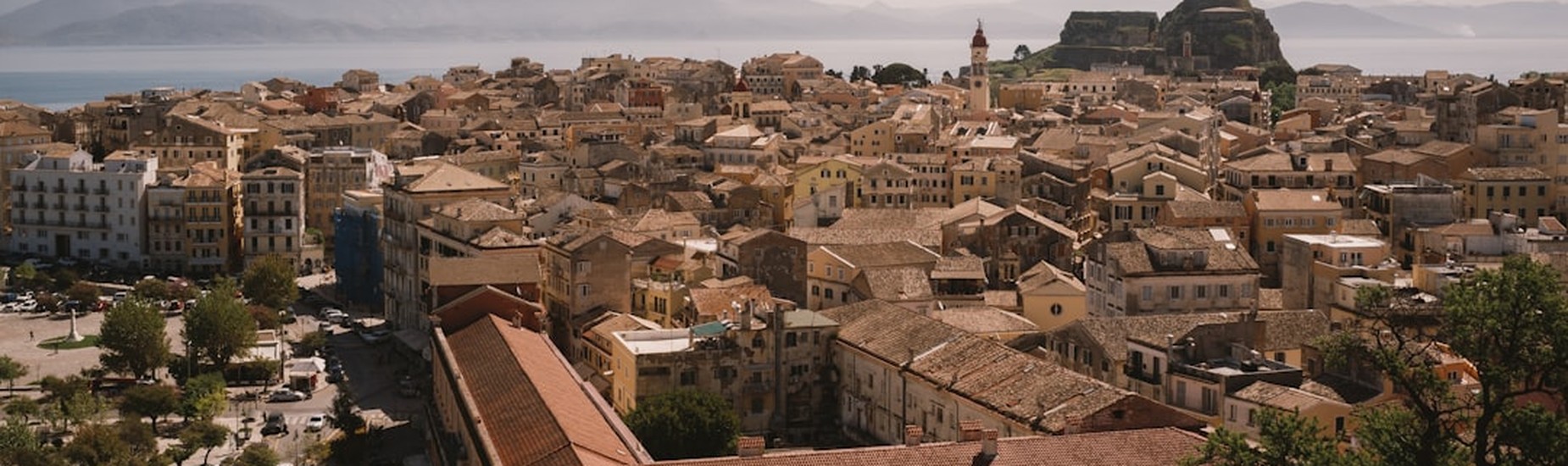
The Venetians also changed the look and culture of the island. Narrow streets, tall buildings, and elegant squares were built, especially in Corfu Town. Many of these buildings can still be seen today. The local language adopted Italian words, and music became an important part of life. Opera and classical music were popular, something rare in Greece at the time.
Religion also played a role. Most people remained Orthodox Christians, but Catholic churches were also built. This peaceful coexistence shaped Corfu’s open and multicultural character. Venetian rule made Corfu part of Western Europe rather than the Ottoman world. This is one of the main reasons why Corfu feels so different from other Greek islands even today.
French and British periods
In 1797, the Venetian Republic fell, and Corfu entered a new era. The French arrived first, bringing the ideas of the French Revolution. They spoke about freedom, equality, and new laws. For the first time, old privileges were removed, and many people felt hopeful about change.
However, French rule did not last long. After a short period of Russian and Ottoman control, the island came under British rule in 1815. Corfu became part of the United States of the Ionian Islands, a British protectorate.
The British left a strong mark on Corfu. They built roads, bridges, and public buildings. They improved the water system and modernized the city. One of their most important contributions was education. In 1824, the Ionian Academy was founded in Corfu, becoming the first Greek university.
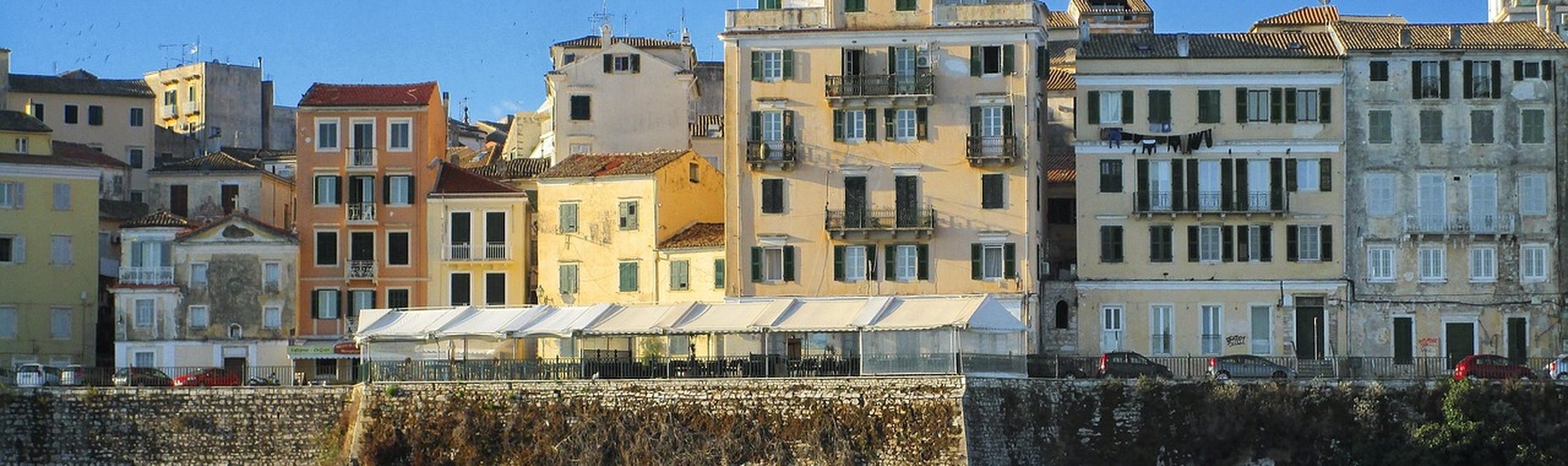
Neoclassical buildings, wide streets, and large squares date from this period. Even today, visitors can see British-style architecture in Corfu Town. Although British rule was not always popular, it helped prepare the island for modern times.
Union with Greece
In 1864, Corfu and the other Ionian Islands officially became part of the modern Greek state. This union was celebrated with great joy. Greek flags were raised, and people believed in a new future as part of a free Greece.
Even after the union, Corfu kept its special identity. Its western influences, music traditions, and architecture remained strong. The island became a bridge between Greek and European culture.
This balance between Greek identity and European heritage is still one of Corfu’s most unique features.
The Corfu Incident of 1923
What was the Corfu Incident? The Corfu Incident, also known as the Corfu Crisis, was one of the most serious international conflicts in Europe after World War I. Although it is often overlooked today, the Corfu Incident 1923 played an important role in modern diplomatic history.
So, what is the Corfu Incident and when was the Corfu Incident? The events took place in August 1923. The crisis began when an Italian general, Enrico Tellini, was murdered near the Greek-Albanian border while working for an international boundary commission. This killing answered the question which murder brought about the Corfu Crisis. Italy, led by Benito Mussolini, immediately blamed Greece, even though there was no clear evidence.
How did the 1923 Corfu Incident begin? Italy demanded a public apology and financial compensation from Greece. When Greece asked for an international investigation instead, Italy reacted with military force. Italian warships bombed Corfu Town, killing civilians, and Italian troops occupied the island. This attack shocked Europe and turned the situation into a full Corfu Crisis 1923.
The conflict was taken to the League of Nations, making the Corfu Incident 1923 League of Nations case one of its earliest major challenges. Although the League became involved, it failed to fully protect Greece. For this reason, the event is often described as a Corfu Incident League of Nations failure and is used as an example in studies such as Corfu Crisis BBC Bitesize.
How was the Corfu Incident resolved? After international pressure, Italy agreed to withdraw its forces from the island, while Greece paid compensation. The Corfu Crisis historical significance lies in the fact that it exposed the weakness of the League of Nations and showed why the Corfu Crisis was a failure in preventing aggression. This Corfu Incident summary proves that Corfu’s strategic position continued to make it vulnerable even in the 20th century.
Corfu WW2 – WW1 and modern history
The 20th century brought difficult years to Corfu. During World War I, the island became a refuge for the Serbian army and government. Hospitals and camps were set up, and thousands of soldiers passed through Corfu.
World War II was even more painful. Corfu during WW2 was occupied by Italian and later German forces. The Old Town suffered heavy bombing, and many historic buildings were destroyed. One of the darkest chapters was the destruction of the Jewish community, which had lived on the island for centuries.
After the war, Corfu slowly recovered. Buildings were restored, and life returned to normal. Tourism began to grow, especially after the 1960s. Visitors from all over the world discovered Corfu’s beauty, history, and warm atmosphere.
Corfu Today – History all around you
Today, Corfu’s past is visible everywhere. The Old Town is a protected UNESCO World Heritage, known for its fortresses, narrow streets, and elegant buildings. Walking through the town feels like stepping back in time.
Venetian walls, British buildings, and French-style squares stand side by side. Music remains an important tradition, with philharmonic bands playing during festivals and especially at Easter. Local customs, food, and daily life still reflect the island’s long history.
History in Corfu is not locked inside museums. It is part of everyday life, from quiet morning walks in the old streets to lively evenings in historic squares.
Why Corfu’s history matters
Corfu is more than a beautiful holiday destination. It is an island shaped by centuries of struggle, cooperation, and cultural exchange. Few places in Greece have such a rich mix of influences from East and West.
Understanding the history of Corfu island helps visitors see the island in a deeper way. The buildings, traditions, and even the local music all tell a story of survival and openness. Corfu shows how history can shape identity without erasing local culture.
For anyone who visits, Corfu offers not only beaches and nature, but also a journey through time. It is a living example of how the past continues to shape the present. To explore historic sites beyond the Old Town, many travelers choose car rentals in Corfu to discover the island at their own pace.
Explore Corfu: A Journey Through Time
Corfu is not just a destination; it’s a journey through time. From its ancient myths to its modern history, every corner of the island tells a story. Whether you’re wandering through the historic streets of the Old Town or exploring the lush landscapes, Corfu invites you to discover its unique blend of cultures and traditions. Embrace the island’s rich heritage and let it inspire your own adventure.
